
Quick answer
How do business credit and personal credit work together?
Personal credit follows you and is often checked when a business is young. Business credit is tied to your company's EIN and builds through vendor accounts and on-time payments. Start by cleaning up your personal credit, then set up your business properly and build its own separate credit history.
The framework
Secure the Base
Secure the Base means building your financial foundation before you try to build height. Credit, cash reserves and clean records are the base. Growth stacked on a weak base eventually collapses.
- 1.Know your numbers — pull your reports and scores.
- 2.Fix what's wrong — errors, late payments, high balances.
- 3.Build what's missing — on-time history, low utilization, a separate business profile.
Why credit matters more than income
You can earn good money and still get denied. Lenders don't just ask "can you pay?" They ask "have you proven you will?" Your credit report is that proof.
For founders, credit decides whether you can get equipment financing, a line of credit, a business card, a lease or a loan when an opportunity shows up. It also affects the rates you pay, which can add up to thousands of dollars.
Strong credit gives you options. Options give you leverage.
How personal credit works
Your FICO score uses five main factors. Knowing them tells you exactly where to focus:
- Payment history (about 35%) — paying on time, every time. One late payment can hurt for years.
- Amounts owed / utilization (about 30%) — how much of your available credit you're using. Lower is better.
- Length of history (about 15%) — older accounts help. Think twice before closing your oldest card.
- Credit mix (about 10%) — a blend of cards and loans can help slightly.
- New credit (about 10%) — lots of recent applications can lower your score.
Read the full breakdown in What Is a Good Credit Score and What Is Credit Utilization.
How business credit works
Business credit is tracked by separate bureaus — mainly Dun & Bradstreet, Experian Business and Equifax Business. The scores look different too. Dun & Bradstreet's PAYDEX, for example, runs from 1 to 100 and focuses heavily on whether you pay vendors on time or early.
To have business credit at all, your company needs to look like a real, separate entity:
- Form a legal entity — usually an LLC or corporation.
- Get an EIN — free from the IRS.
- Open a business bank account — keep business and personal money separate.
- Use a consistent business name, address and phone everywhere.
- Get a D-U-N-S number — free from Dun & Bradstreet.
- Open vendor accounts that report — and pay them early.
The step-by-step version is in How to Build Business Credit.
Personal vs business credit: the key differences
- Identifier — personal uses your SSN; business uses your EIN and D-U-N-S number.
- Who can see it — personal reports are protected; business reports can generally be bought by vendors and lenders.
- Scoring — personal scores run roughly 300–850; business scores use different scales.
- Liability — personal guarantees put your own credit on the line for business debt.
- Why both matter — young businesses usually lean on the owner's personal credit until the company has its own track record.
A 90-day credit plan for founders
Days 1–30: Know and clean
Pull your free reports at AnnualCreditReport.com. Check every account, balance and late payment. Dispute anything inaccurate with the bureau that reports it. Set up autopay for at least the minimum on everything.
Days 31–60: Lower utilization
Pay balances down, ideally under 30% of each limit and lower overall. Pay before the statement date so lower balances get reported.
Days 61–90: Build the business profile
Complete your entity setup, bank account and D-U-N-S number. Open one or two vendor accounts that report, and pay early.
This is education, not financial or legal advice. Talk to a qualified professional about your situation.
Mistakes that cost founders the most
- Mixing personal and business spending — it muddies your records and weakens your business profile.
- Maxing cards for inventory — high utilization drags your score down right when you need it.
- Closing old accounts — it shortens your history and raises utilization.
- Applying everywhere at once — multiple hard inquiries signal risk.
- Ignoring your reports — errors are common, and you can't fix what you don't check.
Free tool
Get the free credit checklist →Key takeaways
- Personal credit is tied to your SSN; business credit is tied to your EIN.
- Payment history and utilization drive most of your personal score.
- Young businesses usually rely on the owner's personal credit first.
- Business credit requires a real, separate entity and vendors that report.
- Secure the base before you build height.
Frequently asked questions
Does business credit affect personal credit?
Usually not directly, unless you personally guarantee a debt or the account reports to personal bureaus. If you guarantee a loan and it goes unpaid, it can hurt your personal credit.
Can I get business credit with bad personal credit?
It's harder but possible over time through vendor accounts that report. Most lenders still check the owner's personal credit for newer businesses, so repairing it helps.
How long does it take to build business credit?
A basic business profile can show up within a few months of reporting vendor accounts. A strong profile takes consistent on-time payments over a year or more.
What credit score do I need for a business loan?
It depends on the lender and loan type. Many traditional lenders look for strong personal scores, while some alternative lenders accept lower scores at higher costs.
Related articles
- Income Gets You Noticed. Credit Gets You Approved.
- How to Build Business Credit From Scratch (Step by Step)
- Credit Utilization: The 30% Myth and the Number That Actually Helps
- You Pay Your Card in Full. Why Is Your Utilization Still High?
- What Is a Good Credit Score? (And the Doors Each Range Opens)
- How to Improve Your Credit Score: The 7-Step Plan I Wish I Had
- Profitable and Broke: The Cash Flow Trap That Kills Good Businesses

About Joshua Corley
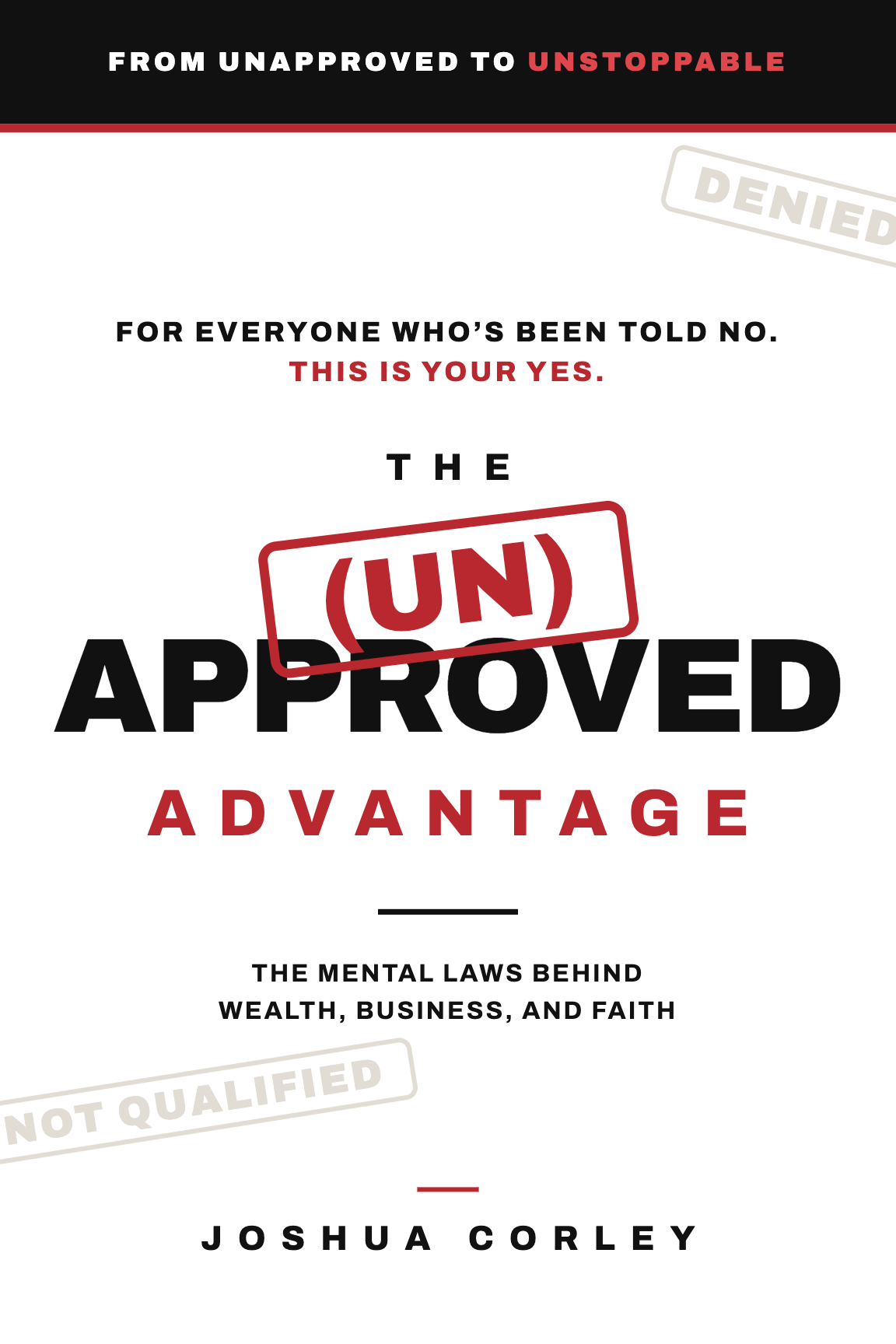
Entrepreneur, investor and author of The Unapproved Advantage. Joshua started his first business at 25 designing high-ticket websites, has built 25+ digital products and founded Remove Credit.
From the book
The Unapproved Advantage
The Mental Laws Behind Wealth, Business, And Faith
The mental laws behind every guide, in full.
Explore the book