
Quick answer
How do founders build discipline and stay productive?
Discipline comes from systems, not motivation. Plan tomorrow tonight, protect one or two focus blocks a day for your most important work, and review your week every Sunday. Small habits done every day beat bursts of effort, and real rest keeps you going long enough to see results.
The framework
Needle-Movers First
Needle-Movers First means every day starts with the one task that actually moves your business forward — revenue, product or relationships — before email, messages or busywork.
- 1.Pick tomorrow's needle-mover tonight.
- 2.Do it first, in a protected focus block.
- 3.Only then open your inbox.
Discipline vs motivation
Motivation is weather. Discipline is climate. You can't control how you'll feel on Tuesday, but you can decide what you'll do on Tuesday.
In the book I put it simply: motivation fades, so show up anyway. The people who win aren't more motivated. They've built routines that run without needing a pep talk.
Discipline creates freedom. The structure you resist is the thing that gives you your time back.
How to plan your day
- The night before — write your top three tasks and circle the one that matters most.
- On paper — writing by hand slows you down enough to think clearly.
- Time-block it — give your needle-mover a fixed slot, ideally your highest-energy hours.
- Keep a done list — tracking what you finished builds momentum.
- Leave space — overbooked days fail. Plan about 70% of your time.
More in Why I Plan My Day on Paper.
Protecting your focus
Focus is the most valuable resource a founder has, and the easiest one to give away. Every notification is someone else's priority asking for your attention.
- Turn off non-essential notifications.
- Batch email and messages into two or three windows a day.
- Use 60–90 minute deep-work blocks with your phone in another room.
- Say no to good opportunities that pull you away from great ones.
Building habits that stick
Start smaller than feels necessary. A two-minute version of a habit you do daily beats an hour-long version you skip.
Attach new habits to existing routines: after coffee, plan the day; after lunch, follow up with leads. Track streaks so you can see progress. And when you miss a day, don't miss two.
Small wins create momentum. Momentum creates confidence. Confidence makes the next hard thing easier.
The weekly review
Once a week — Sunday evening or Friday afternoon — spend 30 minutes on these questions:
- What did I finish?
- What moved the business forward the most?
- What wasted my time?
- What's the one big outcome for next week?
- What appointments and deadlines are coming?
Rest is part of the work
Burnout isn't a badge. Sleep, time with family and real days off make you sharper and more creative. Schedule rest the way you schedule meetings, because nobody else will.
Do this this week
- Pick tomorrow's needle-mover tonight.
- Block 90 minutes of focus time on three days.
- Batch email into two windows a day.
- Do a 30-minute weekly review on Sunday.
- Start a 13-week plan in the free Goal Planner.
Free tool
Start the 13-week goal planner →Key takeaways
- Motivation is a feeling; discipline is a decision.
- Pick your needle-mover the night before and do it first.
- Protect focus blocks like client meetings.
- Start habits tiny and never miss twice.
- A weekly review turns busy weeks into progress.
Frequently asked questions
Is discipline more important than motivation?
For long-term results, yes. Motivation helps you start, but discipline keeps you going on the days you don't feel like it — which is most days.
How do entrepreneurs stay productive?
They focus on a few high-impact tasks, protect their time with blocks and boundaries, and review their progress weekly.
What is a needle-mover task?
A task that directly moves your business forward — closing a sale, shipping a product, building a key relationship — instead of just keeping you busy.
How do I stay disciplined when I'm tired?
Lower the bar, not the standard: do a smaller version of the habit. And treat rest as part of your plan so you're not running on empty.
Related articles
- Motivation Is a Liar. Here's What Actually Works.
- The Free Website That Changed My Life: Why Small Wins Compound
- The $0 Productivity System a Multi-Business Owner Taught Me
- Busy Isn't Progress: How to Spot Needle-Movers (and Kill Busywork)
- Rest Is a Business Strategy, Not a Reward
- Fell Off? The 'Never Miss Twice' Rule Will Get You Back

About Joshua Corley
Entrepreneur, investor and author of The Unapproved Advantage. Joshua started his first business at 25 designing high-ticket websites, has built 25+ digital products and founded Remove Credit.
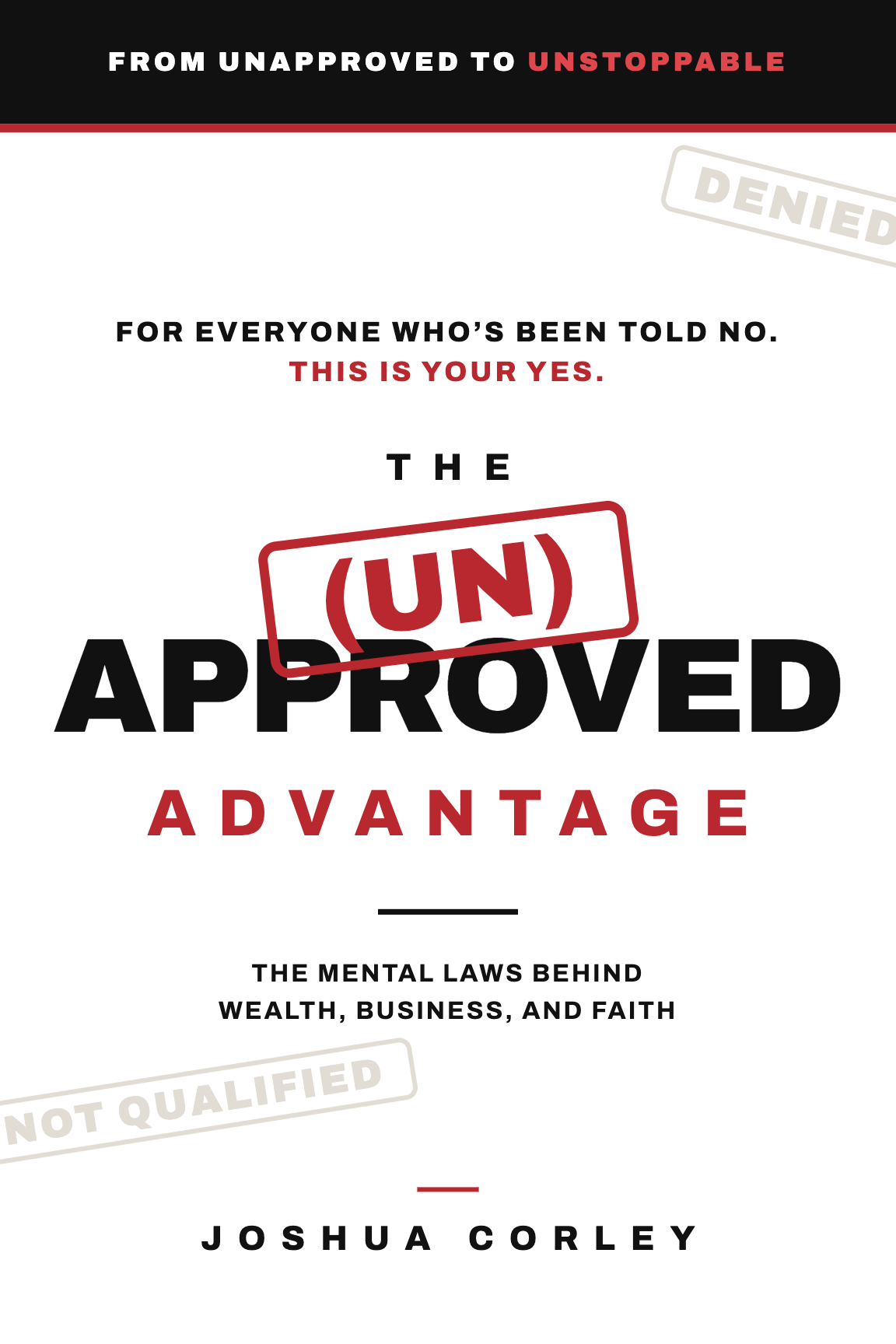
From the book
The Unapproved Advantage
The Mental Laws Behind Wealth, Business, And Faith
The mental laws behind every guide, in full.
Explore the book