
Quick answer
How should entrepreneurs market a small business?
Start with a clear offer for a specific audience, then choose one or two channels where those people already spend time. Share useful content consistently, capture emails so you own the relationship, and track what brings in paying customers. Double down on what works and drop what doesn't.
The framework
Get Seen, Get Trusted, Get Chosen
Every marketing activity should do one of three jobs: get you seen by the right people, earn their trust, or make it easy for them to choose you. If an activity does none of the three, cut it.
- 1.Get seen — show up where your audience already is.
- 2.Get trusted — teach, show proof and be consistent.
- 3.Get chosen — make a clear offer with a clear next step.
Marketing starts with your offer
Great marketing can't save a bad offer. If people don't clearly understand what you do, who it's for and why it's worth the price, more traffic just means more people saying no.
Before you post anything, finish this sentence: I help [specific person] get [specific result] without [their biggest frustration]. If you can't say it simply, your customers can't repeat it.
Know exactly who you're talking to
"Everyone" is not a target market. The more specific you are, the easier marketing gets, because your words land harder.
- What do they want most right now?
- What keeps them up at night?
- What have they already tried that didn't work?
- Where do they spend time online and offline?
- What words do they use to describe their problem?
The best source for these answers is direct conversation. Ask your last five customers why they bought.
Choosing your marketing channels
Pick one or two channels and go deep instead of being average everywhere.
- Content and social — teach what you know on the platform your customers actually use.
- Search (SEO) — helpful articles that answer the questions people type into Google. Slow to start, compounds over time.
- Referrals — ask happy customers directly, and make it easy to introduce you.
- Partnerships — team up with businesses that serve the same customer without competing.
- Local and in-person — events, groups and a complete Google Business Profile if you serve a local area.
- Email — the one channel you own. Nobody can change the algorithm on your list.
- Paid ads — useful once you know your offer converts. Start small and measure.
Content that builds trust
The best marketing content does one of three things: teaches, shows proof or tells a story with a lesson.
- Answer the ten questions customers ask you most.
- Share before-and-after results (with permission).
- Explain your process so buyers know what to expect.
- Tell the story behind why you do this work.
- Repurpose one strong idea into a post, a short video and an email.
Consistency beats virality. Three useful posts a week for a year will do more than one post that goes viral.
Build an email list from day one
Social followers are rented. Your email list is owned. Offer something genuinely useful — a checklist, a planner, a short guide — in exchange for an email, then send helpful messages regularly.
A simple rhythm: one valuable email a week, with a clear offer every few weeks. That's it. You don't need a complicated funnel to start.
A simple path from attention to sale
- Attention — a post, a referral, a search result.
- Interest — your website or profile clearly explains what you do.
- Trust — proof, reviews, helpful free content.
- Action — one clear next step: book a call, buy now or get a quote.
- Follow-up — most sales happen after more than one touch.
Look for the weakest link. If people visit but don't reach out, fix the offer or call to action. If nobody visits, fix visibility.
Measure what matters
Track a few numbers every week: new leads, conversations, sales and where each customer came from. Double down on what produces customers, not just likes.
Do this this week
- Write your one-sentence offer.
- Interview three customers about why they bought.
- Pick one main channel and post three useful pieces.
- Ask two happy customers for a referral or review.
- Create one free resource to start your email list.
Free tool
Draw today's focus card →Key takeaways
- A clear offer is the foundation of every marketing plan.
- The more specific your audience, the easier marketing gets.
- Go deep on one or two channels instead of spreading thin.
- Your email list is the marketing asset you actually own.
- Track customers by source and double down on what works.
Frequently asked questions
How do I market my small business with no money?
Use free channels: tell everyone you know, ask for referrals, partner with complementary businesses, create helpful content, and set up a free Google Business Profile if you serve a local area.
What is the best marketing strategy for a new business?
Start with direct conversations and referrals to get your first customers, then build consistent content on one channel and an email list.
How much should a small business spend on marketing?
It varies widely by industry and stage. Many start with time instead of money, then reinvest a percentage of revenue once they know which channels produce customers.
Is social media enough to market a business?
It helps, but you don't own it. Pair social media with an email list and a website so you're not dependent on one platform.
Related articles
- No Budget? Good. How to Market a Small Business With $0
- 21 Small Business Marketing Ideas That Don't Feel Like Marketing
- Your First 10 Customers Won't Come From Ads. Here's Where They Come From.
- Why Great Marketing Can't Save a Bad Offer
- People Follow People: How to Build a Founder Brand Without Being Cringe

About Joshua Corley
Entrepreneur, investor and author of The Unapproved Advantage. Joshua started his first business at 25 designing high-ticket websites, has built 25+ digital products and founded Remove Credit.
From the book
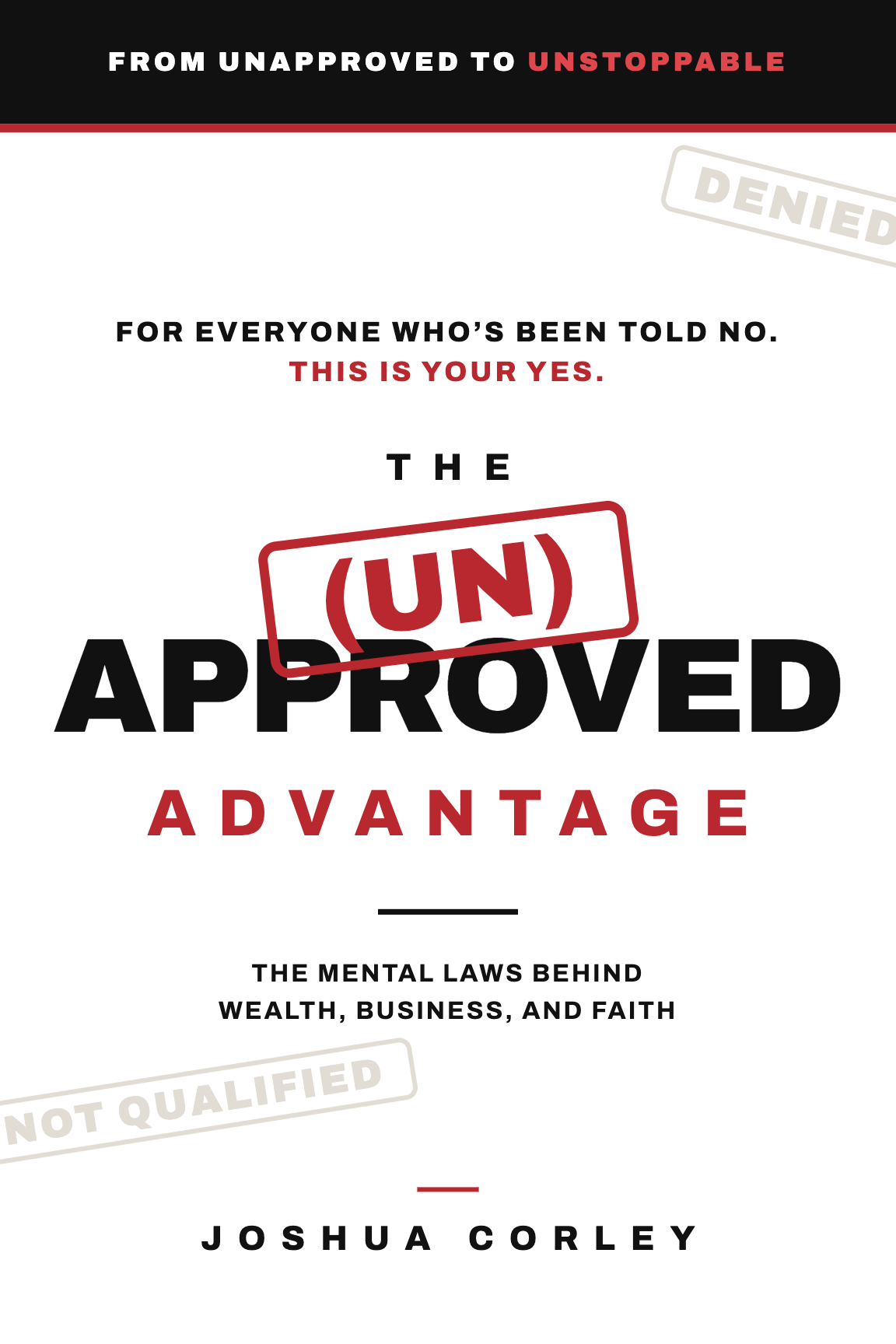
The Unapproved Advantage
The Mental Laws Behind Wealth, Business, And Faith
The mental laws behind every guide, in full.
Explore the book