
Quick answer
How do you start a business from scratch?
Pick a problem you understand, shape a simple offer that solves it and test it with real buyers before spending much money. Register the business, open a separate bank account, then focus on landing your first paying customers. Funding and polish come after you prove people will pay.
The framework
The Three Skills
Every business runs on three skills: marketing (getting seen), sales (getting a yes) and management (multiplying yourself). New founders usually overinvest in the product and underinvest in these three. Learn them in that order.
- 1.Marketing — make the right people aware of your offer.
- 2.Sales — turn interest into a paying customer through honest conversations.
- 3.Management — build systems and people so the business doesn't depend on you for everything.
Step 1: Pick your lane
The best first business usually sits where three things overlap: something you're good at, something people already pay for, and something you can stick with for years.
Don't chase the hottest idea. Chase the one you can execute. A boring business you understand beats an exciting one you don't.
See Easy Businesses to Start for ideas, and score your top choices with the free Business Idea Scorecard.
Step 2: Build a simple offer
An offer is more than a product. It's a specific result, for a specific person, at a specific price, delivered in a specific way.
- Who is it for? — be specific: "busy contractors", not "everyone".
- What result do they get? — describe the outcome, not the features.
- How is it delivered? — service, product, done-for-you, coaching.
- What does it cost? — price on value, not on your hours.
- Why now? — what makes waiting expensive for them?
Step 3: Validate before you build
The cheapest way to test a business is to try to sell it. Talk to 20 people who match your ideal customer. Ask about their problem, not your idea. If they lean in, offer a paid version — a pre-sale, a pilot or a first project at an early price.
A compliment is not validation. A payment is.
If nobody buys, you've saved months. Adjust the offer or the audience and try again.
Step 4: Set up the basics
- Choose a structure — many small businesses start as an LLC. Ask a professional what fits your state and situation.
- Get an EIN — free from the IRS.
- Open a business bank account — never mix money.
- Check licenses and permits — city, county and state rules vary.
- Track every dollar — a simple bookkeeping tool from day one.
- Protect your credit — it will matter when you need funding.
Step 5: Get your first customers
Your first customers rarely come from ads. They come from people you already know, conversations in places your audience already gathers, and referrals from early wins.
- Tell 50 people what you do and who you help — specifically.
- Offer one founding-customer deal in exchange for a testimonial.
- Show up where your customers already talk — local groups, communities, events.
- Follow up. Most yeses come after the second or third conversation.
The full playbook is in the Marketing for Entrepreneurs guide and the Sales guide.
Step 6: Fund it wisely
Customer revenue is the cheapest money you'll ever get. Start lean, reinvest early profits, and only borrow to grow something that's already working.
When you do need capital, your personal and business credit decide your options. Read How to Start a Business With No Money and the credit guide.
Do this this week
- List three business ideas and score each one.
- Write a one-sentence offer: I help [who] get [result] through [how].
- Have five conversations with potential customers.
- Ask one of them to pay for an early version.
Free tool
Score your business idea →Key takeaways
- Pick a lane you can execute, not the hottest idea.
- An offer is a specific result for a specific person at a specific price.
- Validate with payments, not compliments.
- Your first customers come from conversations, not ads.
- Fund early growth with sales whenever possible.
Frequently asked questions
How much money do you need to start a business?
Many service businesses can start for very little, using skills and time you already have. Product businesses usually need more. Start with what you can test cheaply.
Should I quit my job to start a business?
Usually not right away. Many founders build on nights and weekends until revenue covers their essential expenses.
Do I need an LLC to start?
Not always, but a separate entity can help with liability and business credit. Ask a qualified professional about your state and situation.
What's the first thing to do when starting a business?
Define the problem you solve and who you solve it for, then talk to real potential customers before spending serious money.
Related articles
- How to Start a Business With No Money (A 30-Day Plan)
- Easy Businesses to Start — and the 5-Point Test to Pick the Right One
- Why Great Marketing Can't Save a Bad Offer
- Stop Charging for Your Time: How to Price High-Ticket Offers
- Everyone Wants the Penthouse. Nobody Wants to Pour the Foundation.
- How to Find a Business Mentor (Hint: Don't Ask)

About Joshua Corley
Entrepreneur, investor and author of The Unapproved Advantage. Joshua started his first business at 25 designing high-ticket websites, has built 25+ digital products and founded Remove Credit.
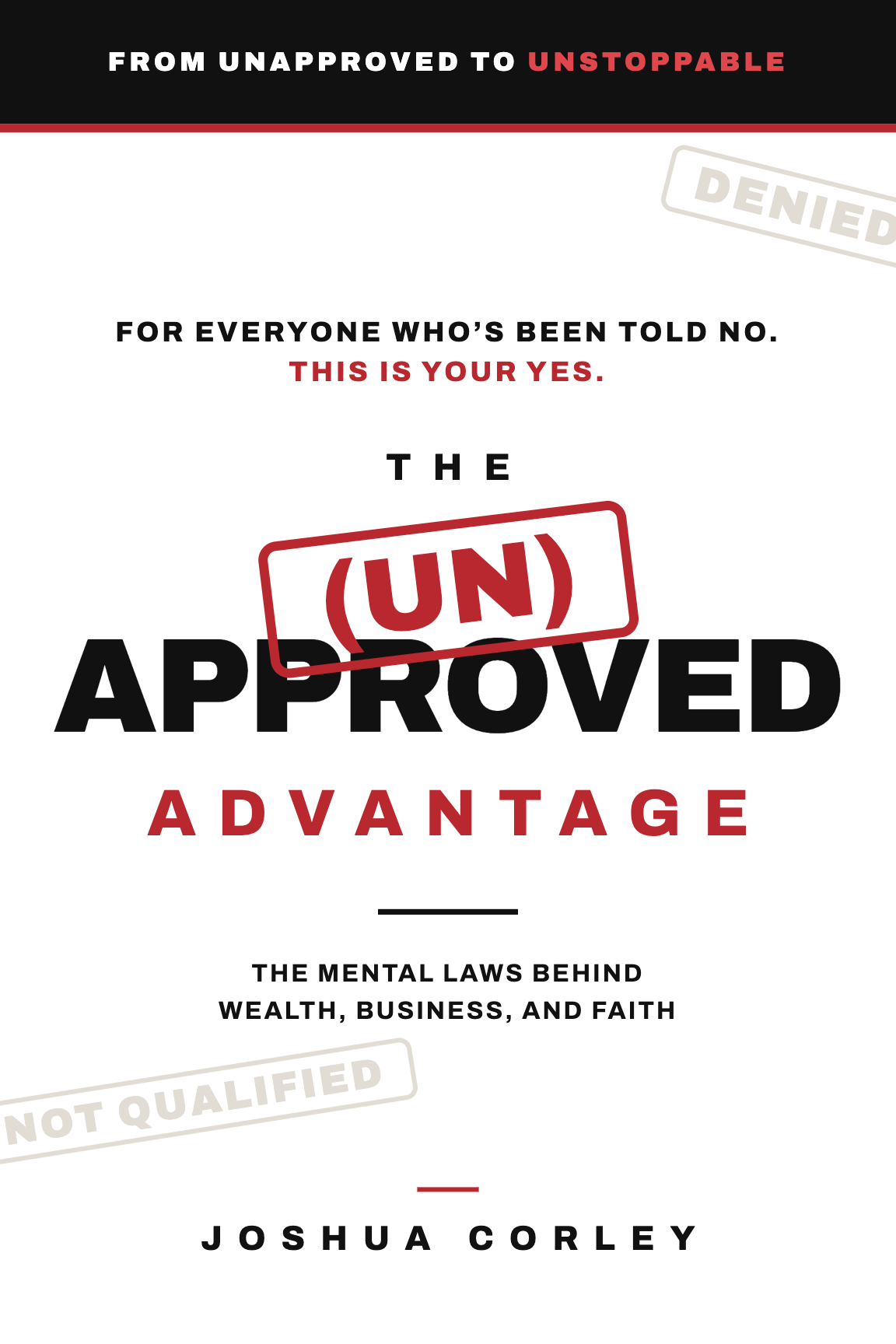
From the book
The Unapproved Advantage
The Mental Laws Behind Wealth, Business, And Faith
The mental laws behind every guide, in full.
Explore the book